

Why Are My Solar Panels Not Generating Enough Power? 7 Common Reasons for Indian Homeowners
You invested in solar panels for your home in India to slash those soaring ₹5,000 or ₹10,000 monthly electricity bills. Perhaps you recently installed a system under the PM Surya Ghar Muft Bijli Yojana 2026. But lately, you’ve noticed something worrying: the generation numbers on your app are dropping, or your DISCOM bill isn't as low as you expected.
"Why are my solar panels not generating enough power?" is a question thousands of Indian homeowners ask, especially after the first monsoon or a heavy dust storm. In India, our unique climate—ranging from the extreme heat of Rajasthan to the high humidity of Kerala—presents specific challenges that can "choke" your solar production.
In this comprehensive guide, we will troubleshoot the most common reasons for low solar generation in the Indian context and show you how to get your ROI (Return on Investment) back on track.
1. The "Dust and Pollution" Factor: The Silent Generation Killer
In India, dust is the number one enemy of solar efficiency. Whether it’s construction dust in a developing colony in Noida or the fine desert sand in Gujarat, a thin layer of "soiling" can reduce your power output by 15% to 30%.
The Impact of Urban Smog
If you live in a Tier-1 city like Delhi, Mumbai, or Bengaluru, air pollution and suspended particulate matter (SPM) act as a filter, preventing sunlight from reaching the silicon cells. During the heavy smog months (October–November), you might see a significant dip even on "sunny" days.
What is the Fix?
- Cleaning Frequency: In India, you should clean your panels at least once every 15 days. In dusty areas, once a week is better.
- The Right Way to Wash: Never use hard borewell water, as it leaves white scale (calcium deposits) on the glass. Use soft water and a microfiber mop.
- Professional Cleaning: Many Indian startups now offer solar cleaning services for approximately ₹500–₹1,000 per visit for a 3kW system.
2. Seasonal Variation: Why "Summer" Isn't Always "Best"
A common myth among Indian homeowners is that the hotter the sun, the more power you get. This is actually false. Solar panels are electronic devices; like your smartphone, they lose efficiency when they get too hot.
The Temperature Coefficient
Most panels are tested at 25°C. On a scorching May afternoon in Nagpur or Hyderabad, roof temperatures can hit 60°C. For every degree above 25°C, your panels might lose about 0.3% to 0.4% efficiency.
The Monsoon Dip
During the Indian monsoon (June–September), cloud cover is the primary reason for low generation. While panels still produce power from "diffused light," a 5kW system that produces 25 units on a clear March day might only produce 8–10 units on a rainy July day. This is normal and is factored into your annual generation average.
3. Shading: The "New Floor" or "Neighbor’s Tree" Problem
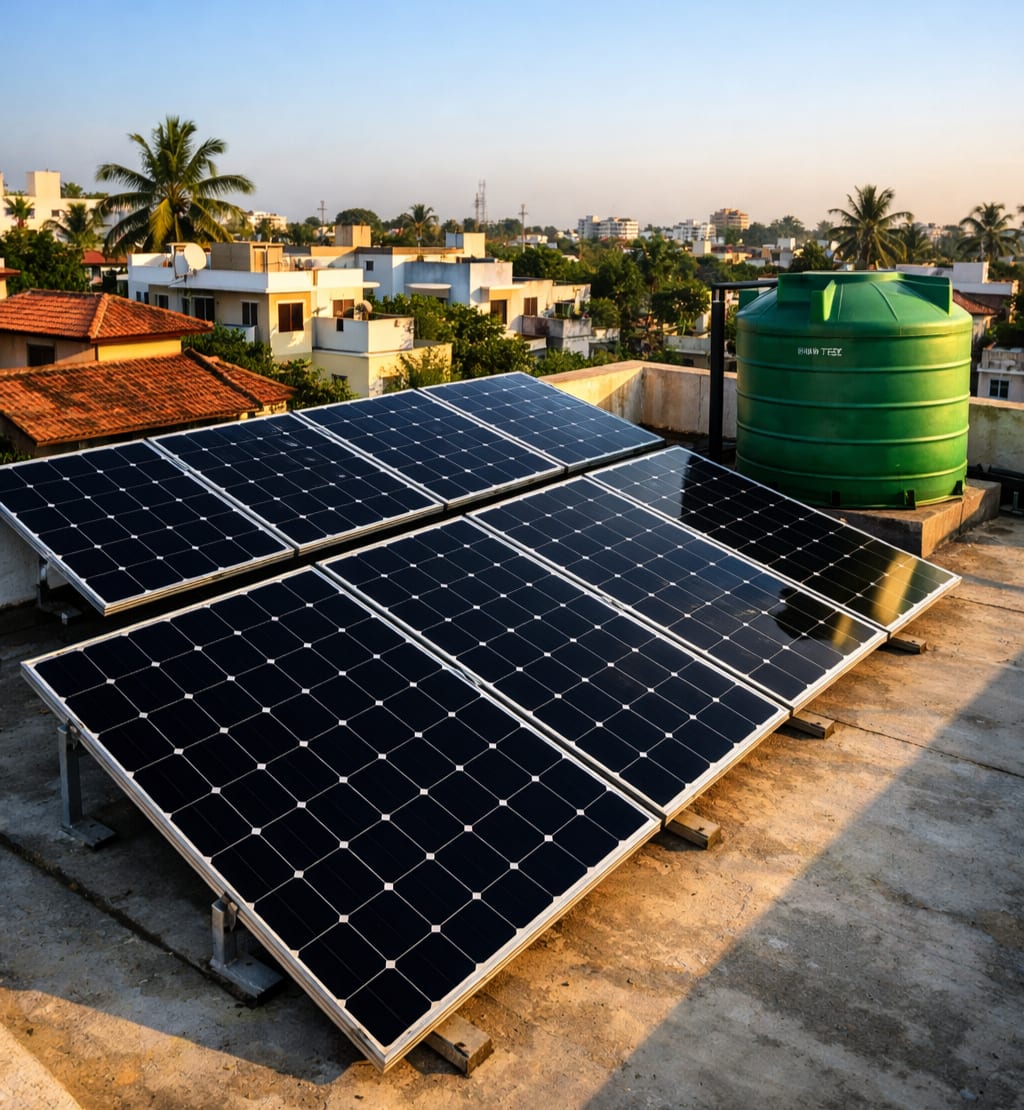
Solar panels are connected in "strings." If even one panel is partially shaded by a chimney, a water tank, or a neighbor’s newly constructed third floor, it acts like a kink in a garden hose. It restricts the flow of current for the entire string.
Common Indian Shading Culprits:
- Overhead Water Tanks: Often placed near the solar structure without calculating the shadow path.
- Dish TV Antennas: A small shadow from a Tata Play or Airtel dish can cause a 10% drop.
- Trees: That Neem or Peepal tree that was small last year might now be casting a long shadow during winter months when the sun is lower in the sky.
Pro Tip: Check your roof at 10:00 AM and 3:00 PM. If you see a shadow on any part of the blue cells, your generation will suffer.
4. Inverter Efficiency and Clipping Issues
Your solar panels produce DC (Direct Current), but your home runs on AC (Alternating Current). The Inverter is the heart of the system. If your inverter is malfunctioning or poorly matched, your generation stays "trapped" on the roof.
Check Your Inverter Screen for:
- Low PV Voltage: Usually happens in the morning or evening.
- Overvoltage (AC): If the local grid voltage in your colony is too high (common in rural India), the inverter will disconnect itself to stay safe.
- Inverter Clipping: If you installed 6kW of panels on a 5kW inverter, the inverter will "clip" or limit the power to 5kW during peak afternoon hours.
Note on PM Surya Ghar Scheme: Ensure your installer has used a BIS-certified and ALMM-compliant inverter. Cheap, unbranded inverters often have efficiency rates below 90%, leading to massive power loss.
5. Wiring Losses and Poor Grounding
In many "low-cost" installations, installers save money by using thin DC cables or long wire runs.
- DC Cable Thickness: For a standard residential setup, 4sq mm or 6sq mm copper DC cables are essential. If the wire is too thin, energy is lost as heat.
- Loose Connections: Heat cycles in India (hot days, cool nights) can cause wires to expand and contract, loosening the MC4 connectors. A loose connection creates resistance and lowers generation.
- Earthing/Grounding: Poor earthing doesn't just lower generation; it’s a fire hazard. Ensure your earthing pits are watered during dry summers to maintain low resistance.
6. Understanding Net Metering Discrepancies
Sometimes, your panels are generating power, but your bill doesn't show it. This is often a misunderstanding of how Net Metering works in India.
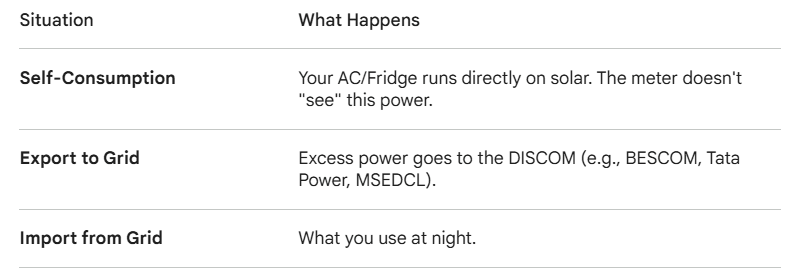
If you check your DISCOM app and see "Lower Export," it might be because you used more power during the day (running the AC more often). Your generation hasn't decreased; your consumption has simply increased!
7. Natural Degradation and Quality Issues
If your system is 5–7 years old, a slight drop is natural. Most Tier-1 brands like Waaree, Adani, or Tata Power guarantee 80-85% performance even after 25 years.
However, if you bought "B-Grade" panels from a local unorganized vendor, the cells might develop "micro-cracks" or "snail trails" due to the intense Indian heat. These are invisible to the naked eye but drastically reduce power.
How to Calculate: Is My Generation Normal?
A simple thumb rule for the Indian climate: 1kW of Solar = 4 to 4.5 Units (kWh) per day (on an annual average).
- 3kW System: Should produce 12–14 units daily.
- 5kW System: Should produce 20–25 units daily.
- 10kW System: Should produce 40–45 units daily.
If your 5kW system is consistently producing less than 15 units on a clear, sunny day in March or April, you definitely have one of the issues mentioned above.
Conclusion: Action Steps for Homeowners
Don't let your investment go to waste. If your solar generation is low:
- Wash your panels tomorrow morning before 8:00 AM.
- Check the app to see if specific hours show a "dip" (suggesting shading).
- Inspect the Inverter for any red warning lights or "Grid Out of Range" errors.
- Call your EPC Installer if the system is under warranty.
For most Indian homes, a simple cleaning and a quick check for new shadows resolve 90% of generation issues.
FAQ Schema Markup
Q: How many units should a 3kW solar system produce per day in India? A: On average, a 3kW system should produce between 12 to 14 units (kWh) per day, depending on the location and weather.
Q: Does rain affect solar panel generation? A: Yes, heavy cloud cover reduces generation, but rain also helps by washing away dust, which can actually improve efficiency once the sun comes out.
Q: Why is my solar inverter showing 'Grid Fault'? A: This usually happens when the local grid voltage is too high or too low. In many parts of India, voltage fluctuations cause the inverter to trip as a safety measure.


